
A ski suit is a one-piece garment designed to provide a continuous layer of insulation and weather protection for the upper and lower body during winter sports. You need a ski suit when you require maximum core heat retention and want to eliminate the gaps where snow or wind can enter between a jacket and trousers. Before choosing, measure your height and your widest hip measurement to ensure the one-piece construction provides enough range of motion for your specific stance.
Ski suits maintain a stable internal temperature by creating a unified thermal seal
The primary problem a ski suit solves is the failure of multi-piece clothing to maintain a consistent thermal seal. In high-speed environments or heavy snowfall, a gap at the waistline allows cold air to circulate into the torso and moisture to penetrate the inner layers. By connecting the garment from the shoulders to the ankles, a ski suit creates a unified environment that maintains a stable internal temperature and prevents external elements from entering the clothing and causing rapid cooling.
If you are planning to hit the slopes on a board, see the best ski suit for snowboarding.
How a Ski Suit Functions to Protect the Body
A ski suit functions by creating a controlled microclimate between the wearer’s skin and the external environment through a three-step process of barrier formation, moisture management, and thermal retention.
- The outer shell acts as a physical barrier that deflects wind and sheds water, preventing moisture from reaching the inner layers of the garment.
- The middle insulation layer traps air molecules, which are the primary medium for heat retention, to keep the body warm even as external temperatures drop.
- The inner lining manages moisture by moving perspiration away from the skin to the outer layers, where it can evaporate and prevent the wearer from getting damp.
Ski Suits we have reviewed in detail
Prices across these 3 run from $119.99 to $139.99; each one has a full review here.
Different designs serve different purposes, so learn about the types of ski suits.


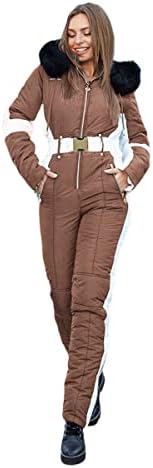
Design Features and Technical Standards of a Ski Suit
The construction of a ski suit relies on specific components that dictate how the garment handles movement, moisture, and temperature.
If a full suit isn’t right for you, explore the alternatives to a ski suit.
Cuff Gaiters and Powder Skirts
A cuff gaiter is a reinforced strip of fabric at the wrist that prevents snow and wind from entering the sleeves. A powder skirt is a wide internal flap of fabric that seals the waist area to keep snow out of the torso. These two features work together to ensure that the one-piece design remains a sealed environment regardless of how deep the snow is or how fast the wearer moves.
Articulated Knees and Reinforced Seat
Articulated knees are pre-shaped folds in the fabric that allow for a natural bending motion without the fabric bunching. This design choice ensures that the material does not tighten across the front of the leg during a deep crouch. A reinforced seat uses high-denier fabric or extra padding to protect the garment from abrasion when sitting on snow or equipment, extending the life of the material in high-wear zones.
Choosing between styles is easier when you compare 2-piece vs. one-piece for ski suits.
Material Standards and Insulation Weight
Many high-performance suits are designed to meet the ISO 20685 standard, which is the international standard for thermal insulation and moisture management in protective clothing. When evaluating a ski suit, look at the insulation weight, which measures the mass of the internal padding per unit of surface area. A higher insulation weight provides more mass to trap heat, though it may increase the overall weight and bulk of the garment.
Proper fit is essential, so learn about the ideal length for ski suits.
Practical Differences in Real World Use
The difference between a ski suit and other winter gear shows up most clearly in extreme weather and high-mobility environments. In heavy powder conditions, a ski suit prevents snow from accumulating inside the legs or torso, which can happen with separate pieces if the waist is not perfectly sealed. For a rider who spends hours on a chairlift or in sub-zero temperatures, the continuous coverage provides a more consistent heat seal that prevents “cold spots” at the waist.
One-piece ski suits offer superior core heat retention over two-piece sets
The difference is less noticeable in dry, mild conditions or in environments where the wearer is primarily standing still. In these scenarios, the mobility of a two-piece set might be preferred over the bulk of a one-piece suit. However, for those who prioritize core heat retention over the ability to quickly remove layers, the ski suit provides a more stable environment.
You can see how this gear performs in our full YEEFINE Ski Suit review.
Common Questions About Ski Suits
Is the material breathable enough that I won’t overheat while moving?
The breathability of a ski suit depends on the specific membrane and the amount of ventilation and moisture-wicking layers included in the design. High-quality suits use materials that allow water vapor to escape while blocking liquid water from entering. If you are engaging in high-intensity movement, you should look for a suit with a high moisture-permeability rating to ensure sweat does not pool inside the garment.
Men seeking high-performance gear can view our full Men’s Snow Suit review.
How does it compare to a standard two-piece jacket and pants set?
A ski suit offers superior core heat retention and a more complete seal against snow compared to a two-piece jacket and pants set. The trade-off is that a ski suit can be more restrictive in terms of movement and takes longer to put on or take off. A two-piece set allows for easier layering and more freedom of movement, while a ski suit (or ski coverall) provides a more unified protective shell.
Is the waterproof coating enough for heavy powder or just light snow?
The effectiveness of the waterproof coating depends on the hydrostatic head rating of the fabric. A suit with a high hydrostatic head rating can withstand the pressure of heavy, wet powder and deep snow. For light snow, most standard ski suits provide sufficient protection, but for heavy powder, you must ensure the suit has both a high-rated coating and a functional powder skirt to keep the interior dry.
Check out the performance details in our full Bluemagic Snowsuit review.
Who Needs a Ski Suit vs. Who Does Not
A ski suit is ideal for individuals who prioritize maximum warmth and a complete seal against the elements, such as those skiing in heavy powder or in extreme cold. It is a practical choice for those who want to avoid the hassle of adjusting a waist seal or managing separate pieces of clothing in harsh wind. If you are a beginner who may need to remove layers frequently or if you prefer the freedom of movement provided by a separate jacket and trousers, a two-piece set may be more suitable for your needs.
The other ski coverall guides we have published
Yuppie Plaza is reader-supported: some links on this page are affiliate links, and as an Amazon Associate Yuppie Plaza earns from qualifying purchases at no extra cost to you. Learn more.