
Ski suits are garments designed to provide a continuous barrier against snow, wind, and cold temperatures. You need a suit that balances thermal retention with moisture management, which is why identifying load-bearing technical specs like insulation weight and hydrostatic head is more important than marketing terms like “arctic-ready” or “blazing warmth.” Before you buy, measure your waist circumference and your preferred range of motion to ensure the garment does not restrict your ability to turn or sit on a chairlift.
Ski Suit Capability and Protection Terms
- Water Resistance – This measures the height of a column of water required to penetrate the fabric. A higher hydrostatic head number indicates a better ability to block heavy snow or high-pressure spray.
- ISO 20685 – This is the international standard for thermal insulation and moisture management in protective clothing. Products meeting this standard provide a verified baseline for how the fabric handles heat and sweat.
- Powder Skirt – This is an internal strip of fabric that seals the waist area to keep snow out of the torso. It is a critical feature for deep snow conditions where snow can enter from above the waistline.
- Cuff Gaiter – This is a seal at the wrist that prevents snow and wind from entering the sleeves. It ensures that the sleeve opening does not become a point of entry for moisture during a fall.
- Moisture Trapping – This describes a failure mode where non-breathable fabrics cause sweat to pool inside the suit. If a suit lacks proper moisture management, the trapped sweat can lead to rapid hypothermia as the temperature drops.
- Seam Failure – This occurs when improperly taped seams allow water to penetrate the garment at high-pressure contact points. Look for listings that specify taped or sealed seams to ensure the construction holds under pressure.
Where these choices show up in our reviews
Each of the 3 shown here has its own full review on this site; they run from $139.99 to $149.99.
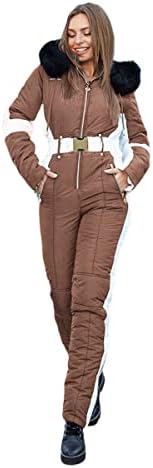
For a deep dive into that specific set, view our full RIUIYELE RY133 review.


Ski Suit Physical and Fit Terms
- 1-Piece – This refers to a ski coverall or jumpsuit that covers the upper and lower body in a single garment. A 1-piece suit provides maximum core heat retention by eliminating the gap between a jacket and pants.
- 2-Piece – This is a set consisting of a separate jacket and pair of pants. You should choose a 2-piece option if you prioritize mobility or need to remove layers quickly during a break.
- Articulated Knees – This refers to pre-shaped fabric and stitching that allows for a natural bending motion without the fabric bunching. This is essential for maintaining a proper skiing posture without the material pulling against your legs.
- Reinforced Seat – This is extra-durable fabric placed on the rear of the suit to protect against abrasion. It prevents the fabric from tearing or thinning when you sit on snow or equipment.
- Waist Size – This measures the circumference of the garment at the waistline. Only 3 of the 7 listings we screened state a specific waist figure, with a median of 30 inches.
- Collar Type – This describes the design of the neck opening, such as Hooded, Faux Fur, or Stand-up. The 7 listings we screened show that 3 offer a hood, 1 features faux fur, and 1 features a stand-up collar.
Ski Suit Compatibility and Accessories
- Ski Goggles – These protect your eyes from glare and wind. You must ensure the goggles have a strap that can fit over the collar type of your ski suit without sliding.
- Base Layer – This is a garment worn against the skin to wick moisture away from the body. A base layer is the first line of defense against hypothermia and works in tandem with the ski suit‘s insulation.
- Helmet – This provides essential head protection during falls. You should check that your helmet’s weight and dimensions do not interfere with the hood or collar of your suit.
Commonly Confused Ski Suit Terms
Another common confusion is between Insulation Weight and Warmth Level. Insulation weight measures the mass of the internal padding per unit of surface area. While a higher weight often correlates with warmth, it does not account for the loft or the specific material used, such as 800-fill down versus synthetic fibers.
How do I choose between a 1-piece and 2-piece ski suit?
The choice between a 1-piece and 2-piece ski suit depends on your priority for heat retention versus mobility. A 1-piece ski coverall offers maximum core heat retention because it eliminates the gap at the waist. A 2-piece ski suit provides greater mobility and allows you to remove the upper layer easily when you are not on the slopes.
Detailed technical specs are available in our full review of the YEEFINE Ski Suit.
What measurements do I need before ordering?
You need to measure your waist circumference and your preferred range of motion before ordering a ski suit. Because fit varies by brand and model, you should always consult the seller’s specific size guide for that model rather than relying on your standard clothing size. Measuring your waist ensures the powder skirt sits correctly, while checking your mobility ensures the articulated knees will not restrict your stance.
Browse our other ski coverall pages
Yuppie Plaza is reader-supported: some links on this page are affiliate links, and as an Amazon Associate Yuppie Plaza earns from qualifying purchases at no extra cost to you. Learn more.