

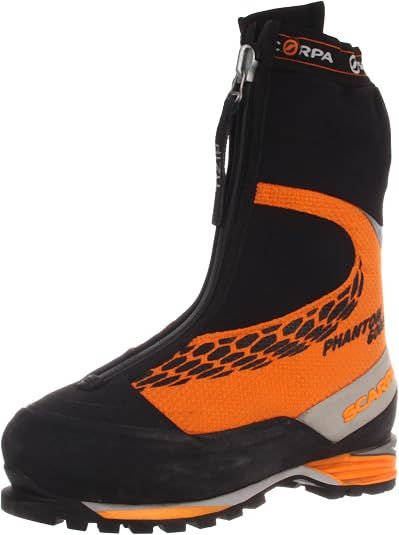
You should measure your foot’s volume and current crampon compatibility before purchase to ensure the fit accommodates your specific gear. This boot is a technical mountaineering boot, which is a heavy-duty piece of footwear designed for climbing on ice and rock.
How the ErgoFit System and Advanced Mid-Sole System provide structural stability
The ErgoFit System works alongside an Advanced Mid-Sole System to maintain structural integrity while the boot flexes. This is critical for mountaineering because a boot that loses its shape under load can cause the foot to shift, leading to instability on steep terrain. The design includes rear randing to protect the heel and a waterproof T-Zip for moisture management. While the 100 Cordura upper provides durability, the data does not state how the ErgoFit material reacts to sub-zero temperatures or if it stiffens in extreme cold. We selected the Phantom 6000 for our comparison based on its integration of the ErgoFit System and the Vibram sole. If you are planning a trek involving heavy crampons, verify that your specific crampon model aligns with the boot’s mounting points.
For more specific details on performance, visit our Scarpa Phantom 6000 FAQ section.
What to Check Before Buying the Phantom 6000
Because mountaineering boots must withstand extreme mechanical loads and temperature shifts, check these points before ordering:
You can find a final summary of our Scarpa Phantom 6000 quick verdict to see if it fits your needs.
- Verify if your specific crampons are compatible with the boot’s mounting points to ensure support during heavy flex.
- Confirm your required warmth level, as the ErgoFit System focuses on motion and the data does not specify a thermal rating.
- Check the break-in period requirements for the 100 Cordura upper to ensure it conforms to your foot shape before a trip.
- Measure your foot width to ensure the ErgoFit System provides a secure fit without restricting circulation.
Choosing the Right Mountaineering Boot
The Phantom 6000 is suited for climbers who need a balance of flexibility and protection, such as someone navigating a glacier where constant movement is required. If you need a boot for extreme high-altitude expeditions where maximum rigidity is the priority over flex, you may want to look at boots with higher-rated technical specifications. This model serves as a versatile option for those who prioritize a system that adapts to the foot’s natural motion while maintaining a waterproof, durable exterior.
If you are concerned about impact, see how the Phantom 6000 handles technical climbing shock.
If you require a boot that prioritizes a flexible, motion-oriented fit for varied alpine terrain, choose the Phantom 6000.
For those needing specific hardware compatibility, see the best mountaineering boots for semi-rigid crampons.
Browse our other mountaineering boot pages
- Choosing the Best Mountaineering Boots for Women
- Best Mountaineering Boots for Trekking
- Technical Climbing Mountaineering Boots Compared
- Choosing the Best Waterproof Mountaineering Boots for Harsh Conditions
- The Mountaineering Boots That Work Best for Wildland Firefighting
- Which Mountaineering Boots Are Best for Semi-Rigid Crampons?
Yuppie Plaza is reader-supported: some links on this page are affiliate links, and as an Amazon Associate Yuppie Plaza earns from qualifying purchases at no extra cost to you. Learn more.